Concrete Parking Lot Building in Liberal KS - a slab built for the traffic it carries
Gravel ruts, potholes or a lot that holds water? We build concrete sized for the vehicles that use it, on evenly prepared ground.
- Licensed and fully insured.
- Free estimates at your property.
- Replies within 1 business day.
What goes into building a concrete parking lot?
Concrete parking lot building in Liberal starts with the ground, not the concrete. We prepare the subgrade, which is the soil the pavement sits on, and then place concrete built for the cars, pickups or heavier trucks that will use the lot.
Most owners who call about a lot are tired of regrading gravel or patching old pavement, or they're putting up a building and need parking beside it. The price moves with the lot's size, the slab thickness your traffic calls for, how much soft or uneven ground has to come out and how much old surface we remove first. The schedule turns mostly on the weather, the city paperwork and the days the concrete needs before anyone drives on it. Your own figure comes in a written estimate that explains what we'd do and why.
How do you know your lot is ready for concrete?
Ruts and potholes in gravel
Ruts where cars turn and holes that open after every rain usually mean the gravel is working down into soft ground. Each regrading costs you again, and the holes come back while mud follows customers through the door.
Water standing after rain
Puddles that sit for days point to low spots or ground that slopes the wrong way, sometimes toward the building. The longer water sits, the more it softens the ground underneath and the closer it gets to your foundation.
Cracked, sunken old pavement
Broken edges and sunken patches, often along the path trucks take, usually mean the ground settled or the old surface was too thin for its traffic. Patches rarely hold for long, and the broken areas keep growing into trip hazards.
How we handle concrete parking lot building
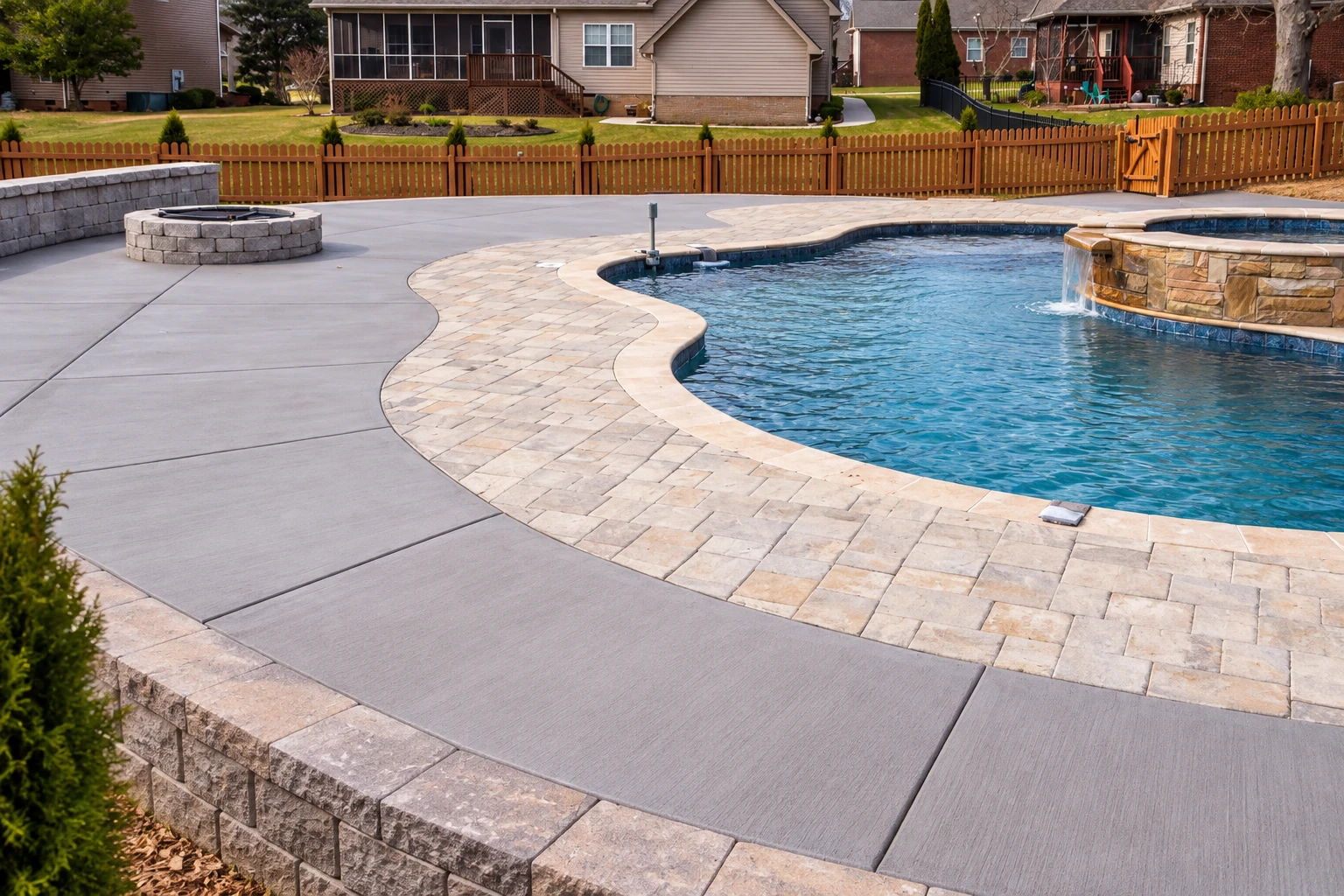
My first question on any lot is what vehicles will use it, because that decides how thick we build the slab and whether it needs rebar, the steel bars that add strength and hold the concrete together. Then we work the subgrade until it's even and consistent under the whole area, digging out any soft or different patch and filling it with material like the rest, so no part of the lot settles faster than another. We set the forms so water runs away from the building, place the concrete early in the day so the top doesn't dry too fast and turn weak, give it a broom finish, a light texture that helps tires and shoes grip, and cut control joints, shallow grooves that give the slab a planned place to crack. If the budget gets tight, I'd ask you to keep the money in the ground work and save on the surface, because the ground is the one part you can't fix later without tearing out the lot.
A parking lot rarely stands alone. Light poles, signs and any new building beside the lot sit on concrete footings, which we can pour as part of the same job, and if the building the lot meets has settled, foundation raising brings it back up before we set the pavement against it.
Lots for cars and pickups
This suits shops, offices, churches and rentals where the traffic is mostly cars and pickups, because a lighter load usually means a simpler slab. The ground still gets the same care, since that's what keeps the surface even.
Lots that see heavy trucks
Delivery trucks, work trucks and trailers call for a thicker slab and sometimes rebar, so this is the plan for businesses that take deliveries. Telling us about the heaviest vehicle, even one that comes once a week, keeps the lot from being built too light.
Replacing gravel or old pavement
This suits owners who've patched or regraded long enough, because we take out what's there and check the ground before anything new goes down. Soft spots hiding under an old surface get dug out and filled now, while they're easy to reach.
Your parking lot, planned and priced in writing
We reply to every call and message within one business day, and then I set a time to come out, look at the site and ask what vehicles will use the lot. The estimate is free and done at your property, with no pressure and no obligation. You'll get it in writing, with what we'd do and why.
(620) 482-9704What changes a concrete parking lot job in Liberal
The City of Liberal requires permits for a range of building and construction work, and one of its permit forms is a Concrete Permit Application, sent by email to bldgdept@cityofliberal.org. Seward County also requires building permits for each project, and its Planning and Zoning office reviews plans before a permit is issued. Which of these a parking lot needs, and whether the county's applies inside city limits, isn't something I'd guess at. So we check with the city's Building and Code Enforcement Department about your lot, take care of the permit when one is required and tell you what we learn.
Most lots we're asked about in Liberal and the cities around it sit beside shops, offices, churches and rental buildings, and many see pickups and work trucks along with cars. Ground often varies across a site where old gravel, fill or a former building sat. The common ways to firm up weak or swelling soil are treating it with portland cement, fly ash or lime, or bringing in better soil, and if your site needs one, the estimate says which and why.
What happens when you call about a parking lot in Liberal?
Call or send the form
Call (620) 482-9704 any day between 8 AM and 9 PM, or write to us through the form. We'll set a time for me to come out and look at the site.
Walk the site together
I ask how you'll use the lot, look at the ground and where the water runs, and then send a written estimate that explains what we'd do and why. You'll know what you're paying for before any concrete arrives.
Sort out permits and weather
Once you decide to go ahead, we look into the city paperwork and plan the pour around the weather. When the permit calls for an inspection, the city's Building Department books it by phone with at least four hours' notice, so we schedule it ahead of the step it covers.
Build, cure and clean up
I'm on site with our crew from setup through cleanup. The new slab then needs curing, a stretch of time left alone so it gains strength, and we'll tell you when people and then vehicles can go back on it.
Frequently asked questions
How thick should a concrete parking lot be for cars and pickups?
For passenger cars and pickup or panel trucks only, industry design guidance says 4-inch concrete without reinforcement is usually satisfactory. The right thickness also depends on the soil and the concrete's strength, and delivery or heavier trucks call for a thicker design. Please tell us every vehicle that will use the lot, including the occasional one.
How much does it cost to build a concrete parking lot in Liberal, KS?
The cost comes from your lot's size, the thickness its traffic calls for and how much ground work the site needs, so I give you a figure in a written estimate after I've seen it. Removing old gravel or pavement, fixing soft spots and correcting drainage all add work, while a simple layout on firm, even ground keeps it down. Call (620) 482-9704 and I'll come take a look.
How much upkeep does a concrete parking lot need?
Not much, as long as it's designed and built for parking. The concrete industry's guidance is that a lot built that way can be economical and serve well for many years with little maintenance, and the design is what keeps long-term upkeep low.
How do I know if my parking lot needs accessible parking spaces?
The federal guide to the ADA Standards says each parking facility on a site, such as a lot, requires accessible parking spaces. That applies to employee or restricted parking the same as public parking, so it's worth deciding where those spaces go before the lot is laid out.
What is the best way to protect a concrete parking lot from freeze-thaw damage?
Use air-entrained concrete, which has tiny air bubbles mixed in that give freezing water room to expand. Design guidance calls it essential where pavement goes through freezing and thawing. You can ask that the concrete ordered for your lot includes it, and any contractor should be able to answer that in writing.
Does a parking lot project need a stormwater permit in Kansas?
It does if the work will disturb one acre or more through clearing, excavating or grading, because Kansas requires the owner or operator of that construction to have stormwater permit coverage. The same goes for a site that's part of a larger development plan disturbing an acre or more in total. If your lot is part of a bigger project, we'll raise it early, and you can read the state's stormwater rules yourself.
Liberal, KS
Tell us what will park on your lot
Have the site address, the lot's rough size and the vehicles that will use it ready when you call (620) 482-9704 or send the form, and I can come out with the right questions already in mind.